

For serious fiction writers
Build the skills to finally publish a novel readers will love.
Not another draft stuck in a drawer. Not a seventh rewrite. Not a book you’re embarrassed to hand out. A finished novel you’re ready to put into the world, built by deliberate practice with the editor with a 35 year track record.
The 4 Steps to Writing a Publishable Novel. Free and on-demand.
Shawn Coyne has acquired, edited, published, or represented
- James Lee Burke
- Michael Connelly
- Harlan Coben
- Steven Pressfield
- Ian Rankin
- Don Winslow
- Robert Crais
- Ruth Rendell
- David Mamet
- Robert McKee
- 86%of the books Shawn published were profitable. Industry average ~35%.
- 100,000+writers on the Story Grid email list.
- 3.5Mdownloads of the Story Grid Podcast.
The average unpublished writer has been at it for 14.9 years.
We surveyed 506 writers and asked how long they’d been working on their writing without publishing anything. The average answer was 14.9 years. If that sounds like you, the cycle probably looks familiar. You write something. You read it back, and it’s not working. So you go read a craft book, watch some YouTube videos, take a class on structure or character development, etc. Your confidence grows, so you rewrite. You read it back, and it’s still not very good. So you learn something else. Then rewrite again.
This cycle has a name: the Writer Doom Loop.
See the way outWatch the free training — about 60 minutes, on-demand- 14.9
- years, and counting
- (Re)write.
- Read it back. “it’s not working”
- Go learn something new.
- Your confidence recovers.
Now, imagine your book is out in the world.
You’re walking down the street, and somebody stops you. They tell you they’ve read your book, they loved it, and it’s stuck with them long after they read the last page.
That’s what this is about. Not bestseller lists. Not a big advance. Not industry accolades.
Writing something that actually reaches people, changes them, and leaves a legacy.
You’re not stuck because you don’t have enough talent or knowledge.
You’re stuck because writing is one of the most wicked learning environments there is. In a kind environment, like playing guitar, you hit a wrong note and hear it instantly. In writing, feedback is delayed, missing, or misleading. You write something today and find out it doesn’t work years later, if you ever find out at all.
How do you escape the Writer Doom Loop?
Separate practice from performance.
You can’t learn to write a novel by writing a novel, the same way you don’t learn to play the piano by trying to play Beethoven’s Moonlight Sonata. You have to start by practicing the fundamental skills first.
Break the big skill into small ones.
Writing isn’t one skill, it’s a collection of smaller skills. You have to learn how to write dialogue, exposition, and description. You have to learn character development, rising tension, and conflict. And many more. The best way to learn these is by practicing them one at a time.
Get expert feedback.
Friends want to be nice. Beta readers tell you what they like. Writing groups are amateurs critiquing amateurs. AI tells you what you want to hear. The only way to get feedback that actually helps is to ask an expert.
Get feedback in short loops.
Write a small piece focused on an individual skill, then get expert feedback on what you did right, what you did wrong, and what you need to practice next.
Practice the skills every day.
It’s better to spend 30 minutes a day working on specific skills (and getting feedback) than trying to improve your writing by just writing 1000 words a day.
All five conditions, built into daily practice.
Can you spot the problem?
This passage has one specific, fixable craft problem. An editor would catch it in five seconds.
Did you FEEL something was off? Could you NAME it? Could you FIX it?
Margaret stood at the kitchen window full of sorrow, watching her son load the last box into his truck. Twenty-three years in this house, and it had come down to a single afternoon. She was proud of him, and heartbroken, and she understood that both things could be true at once.
Did you FEEL something was off? Could you NAME it? Could you FIX it?
What happens when writers stop guessing
“After forty years of trying again and again, I finally got published thanks to the Story Grid methodology.”
D. Scott ThayerPublished in 3 magazines “It took me just seven months to journey from a vague idea to the finished working first draft of my novel.”
Brent SpaldingAuthor of The Trauma Machine “My writing used to be terrible and it wasn't until I worked with Story Grid that I actually started improving and becoming a writer good enough to be published.”
Ryan McRaeWorked at it for over a decade “I heard the advice “Show don't tell” for more than a decade, but I was lacking a framework to write what's observable. Happy to say that I finally unlocked it.”
Alexander Kluge (naii.io)Germany “Reading craft books and taking courses was frustrating and never useful.”
Cynde HermanLos Angeles, CA “Then one evening I saw a few examples in a show I was watching and thought, that's what they mean.”
ElisabethNashville, TN “I needed to give the readers more to see so they could form their own inferences and be drawn in as co-creators.”
Dawn BrooksPocatello, ID “At first it seems just like copying, but turns out copy work is a great way to understand a form.”
 Paul ProczkoChicago
“I could not recognize my own telling and would have insisted it was showing until it was pointed out why it wasn't working.”
Anne MilneOntario, Canada “Big sigh of relief; I was worried that I was never going to get it.”
Greg SmithOlympia, WA “I finally understood how much specificity matters, and how to make a scene build on itself instead of starting over.”
Elle BriggsUtah “The inciting incident, the automatic reflex and the complication on the Physical plane I can write now every time I sit down to write.”
Deanne NuttallSt. George, Utah
50+ years inside the publishing industry. Now teaching you what they know.
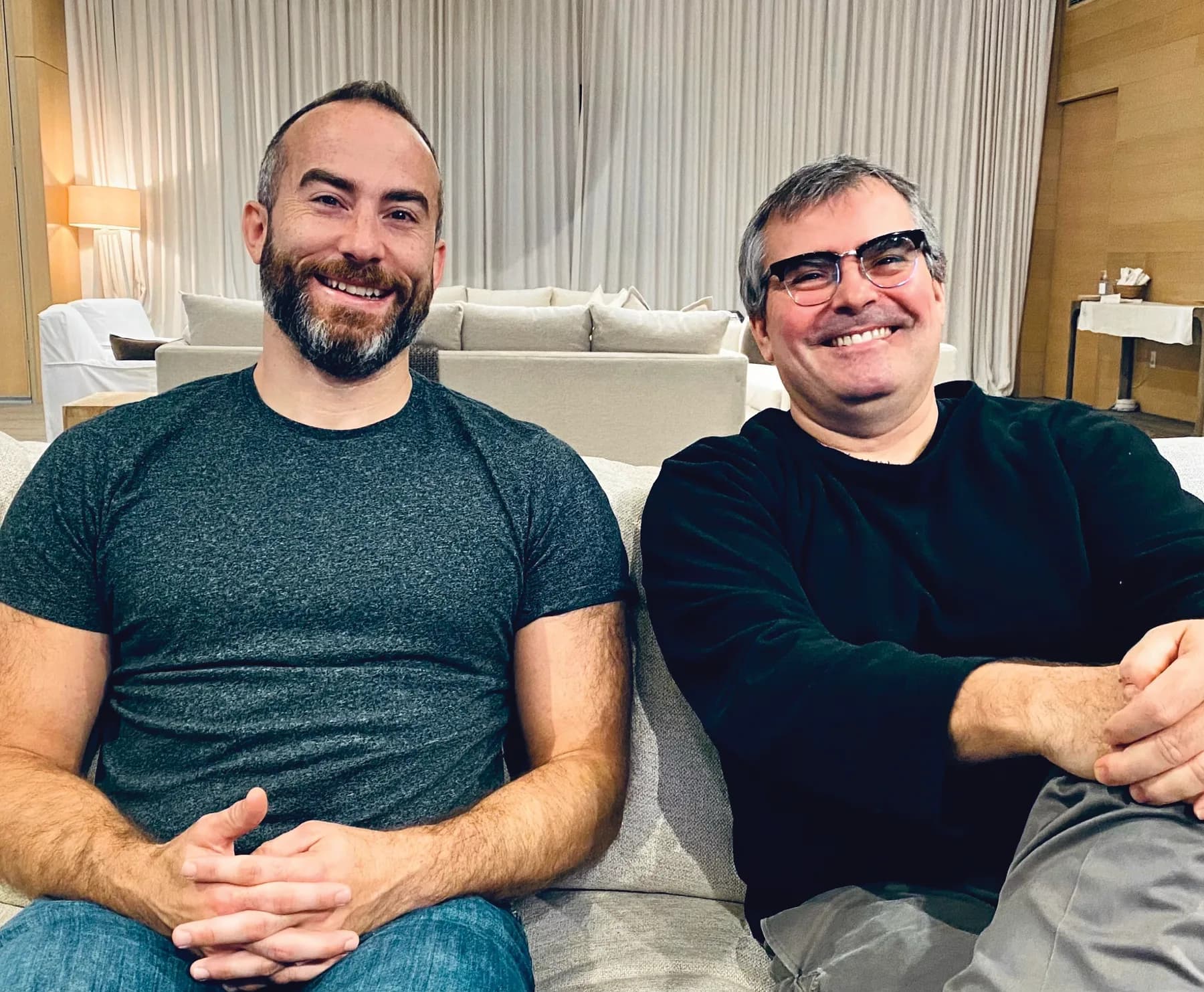
 Shawn CoyneFounder of Story Grid
Creator of the Story Grid methodology. 35+ years as an editor and publisher, including at Big Five houses, plus time as an independent publisher and literary agent. Has acquired, edited, published, or represented James Lee Burke, Michael Connelly, Harlan Coben, Steven Pressfield, Ian Rankin, Don Winslow, and more. New York Times bestselling author, and author of The Story Grid: What Good Editors Know.
86%of the books he published were profitable. Industry average ~35%.
 Tim GrahlWriter and Editor at Story Grid
18 years in publishing and author of 6 books including the novel The Shithead and Your First 1000 Copies, a perennial bestseller for over 13 years. Spent over ten years trying to write a novel and failing: 12 unfinished manuscripts and a shelf full of craft books. Then he learned this method from Shawn.
“I was well on my way to being one of those 14.9-year writers.”
The free training
The 4 Steps to Writing a Publishable Novel
This is the path to building the skills to write a book you’re proud to publish.
Start with the sentence.
Readers experience your book one sentence at a time, and a lot of the skills of writing live right there.
Scenes.
Once you can write sentences, you can build strong scenes, where the real changes in your story happen.
The Short Story.
Learn to arc a complete story in five to seven scenes, with a first draft that's publishable.
The Novel.
Now, and only now, you write the novel. And your first draft works. No more page one rewrites.
Not 14.9 years of hoping. One to two years of building. And then the skills are yours for life.
Watch the Free TrainingThe Story Grid Dojo
30 minutes a day to build your writing skill step-by-step
The 4 Steps, built into a daily practice. Short exercises, expert feedback in short loops, and a clear path from the sentence up to short stories and novels readers love.
Daily exercises with feedback
Short assignments, each focused on one skill. Every one is analyzed by Shawn Coyne’s Craft Ladder™ Process, and your feedback comes back within 24 hours with your next assignment.
The Story Grid Teacher's Assistant
A custom tutor trained on the Story Grid canon. Stuck on a concept? Ask it anytime, and it answers from Shawn’s method, not the open internet.
A growing training library
Video and written lessons from Shawn and Tim on every skill in the path, from the sentence up to the novel.
Hundreds of drills
Quick reps that train your eye to spot what’s working and what isn’t on the page, so each concept sticks.
Want more direct help?
Group Coaching
Limited to 35
- Includes everything in the Dojo
- Work closely with Tim and a group of up to 35 writers
- Shawn helps once you reach the short story and novel levels
- Weekly workshops and office hours
- Message Tim directly as needed
1-on-1 Mentoring
Limited to 10
- Includes everything in the Dojo
- Bi-weekly Zoom calls with Tim, plus weekly scene feedback (written and video)
- Work with Shawn once you move to short stories and novels, developing them into publishable pieces
- Message Tim directly as needed
- For writers with 10 to 15 hours a week to commit
Questions writers ask
Still not sure? The training answers most of this in the first twenty minutes.
No. These are learnable skills, at any age. The expensive option isn't one to two years of building skills. It's the next 14.9 years in the loop.
Books and courses give you information and knowledge, but not the actual writing skills. That's why you can keep learning more and more, but you stay stuck in the Writer Doom Loop. The Dojo gives you short daily practice with expert feedback, so you find out what's wrong with your writing and build the skills to fix it.
Yes. Most of the problems in a stalled draft live at the sentence and scene level, and you can't fix what you can't see. Building those skills first is what ends the page one rewrites.
30 minutes a day in the Dojo. You'll see real progress in the first few weeks.
A story readers are excited to read, love, leave a 5-star review for, and tell their friends about. Whether you go traditional, self-publish, or submit to magazines, that's the bar.
AI is built to tell you what you want to hear and has no consistent standards. Every time you prompt AI you get different answers. In a wicked learning environment, you need an expert who will tell you the truth.
Yes. Our examples and curriculum focus on fiction, but the core skills are the same: sentences that show instead of tell, scenes where something changes, and stories that hold a reader. Memoir and narrative nonfiction writers are welcome.
Yes. You're starting in the right place. Beginners who build the skills in order avoid years of the Doom Loop.
No. You start at the sentence level and learn the methodology as you go.
You don’t have a talent problem. Let’s fix the environment.
Start with the free training, The 4 Steps to Writing a Publishable Novel. Watch it free and on-demand.